
Attachment Styles and How They Impact Our Relationships by Psychic Jenna
Date 3/27/2026
Explore More:
Romance
As a psychic with years of experience guiding clients through their deepest emotional connections, I've found that understanding adult attachment styles significantly impacts the quality and longevity of relationships. Navigating relationships is undeniably challenging. Whether you've experienced the joys and trials of long-term commitment or are venturing into new situations, relationships demand dedication, compromise, and substantial emotional investment. What I tell people is that beneath the surface, a fundamental aspect influences our relationship dynamics: our attachment style. This deeply ingrained, subconscious pattern not only shapes how we connect with others but also influences the course and success of our relationships. Trust me, it's rooted in psychological science, highlighting the fundamental importance of these patterns.
In this article, I will dive deeper into the essence of attachment styles, their impact on relationship dynamics and longevity, and practical ideas, tools, and tips for cultivating secure and healthy attachments. Understanding and recognizing your own attachment style (and that of your partner) can be transformative for both individuals and the relationship, offering a pathway to deeper emotional connection and overall relationship harmony. Here's where it gets exciting, we can consciously work towards better connections.

Understanding the Foundation: What Are Adult Attachment Styles?
Adult attachment styles, which are comprised of four distinct patterns (secure, anxious, dismissive avoidant, and fearful avoidant, also called disorganized), dictate how we engage and connect emotionally with partners. Three of these are known as "insecure attachment styles" (Anxious, Dismissive Avoidant and Disorganized/Fearful Avoidant) while secure attachment is viewed as the healthiest and most fulfilling. While we often categorize them for simplicity, attachment is also understood dimensionally, along axes of anxiety and avoidance, and these dimensions contribute to the broader styles. I've found that understanding this nuance really helps my clients.
Formed early in life through interactions with caregivers, these styles reflect our fundamental approach to intimacy and closeness. Childhood experiences, such as consistent nurturing, or neglect and trauma, significantly mold these styles, laying the foundation for our adult behaviors within relationships. In my experience, these early patterns set the stage for how we seek and receive emotional intimacy from others.
How Do Our Attachment Styles Develop?
Our attachment styles, and how we connect with others on an emotional level, are formed in our early youth, when we're still infants and small children. Our relationship with our caregivers, and more specifically, how our caregivers interacted with us as infants, plays a significant role in affecting how we interact with partners in our adulthood and how we connect with them. Thus, your earliest bonds in life will eventually affect your future romantic relationships. What that really means is, the template for love you learned as a baby often carries into your adult love life.
If, as a child, you were cared for by a consistent, loving, supportive, and nurturing caregiver who paid attention to your needs, you’re more likely to develop healthy, stable, and secure adult relationships. Consequently, you would likely develop a secure attachment style. However, if your caregiver was inconsistent with love or affection, neglected your needs (emotionally or physically), was abusive, or showed disinterest, you are likely to develop an insecure attachment style. These early patterns will likely continue into adulthood unless conscious changes are made. Here's what I've noticed: these patterns aren't just theoretical, they play out in everyday interactions, creating recurring relationship problems.
What Factors Shape Insecure Attachment Styles?
In my practice, I often see that several key factors contribute to the formation of insecure attachment styles. These aren't random, but often direct responses to early childhood experiences. Think about it this way: a child learns what to expect from relationships based on their first, most important ones. Some common factors include:
-
Inconsistent or Unresponsive Caregiving: Caregivers who are sometimes attentive and sometimes distant can lead to anxious attachment, leaving a child unsure if their needs will be met.
-
Parental Depression or Addiction: When caregivers struggle with their own mental health or substance abuse, they may be less emotionally available, inadvertently fostering dismissive avoidant tendencies.
-
Trauma or Abuse: Experiences like physical, emotional, or sexual abuse, or witnessing domestic violence, are significant contributors to disorganized attachment, creating a deep conflict between seeking closeness and fearing it. This direct link between childhood trauma and attachment is something I see frequently.
-
Neglect and Separation: Children who experience prolonged neglect or frequent separations from primary caregivers without adequate comfort can also develop avoidant or disorganized patterns.
-
Inconsistent Parenting Styles: A lack of predictability in a caregiver's responses, or mixed signals, can also hinder the development of a stable sense of security.
Each attachment style is unique. You may find that you perfectly fit into one category, or you may find that you have elements of one, but not all. Remember that each person is an individual with very specific traits and characteristics. Attachment styles are generalizations, but they do not embody the depth of the individual.
Exploring the Four Adult Attachment Styles: Characteristics and Dynamics
Anxious Attachment Style: The Quest for Closeness
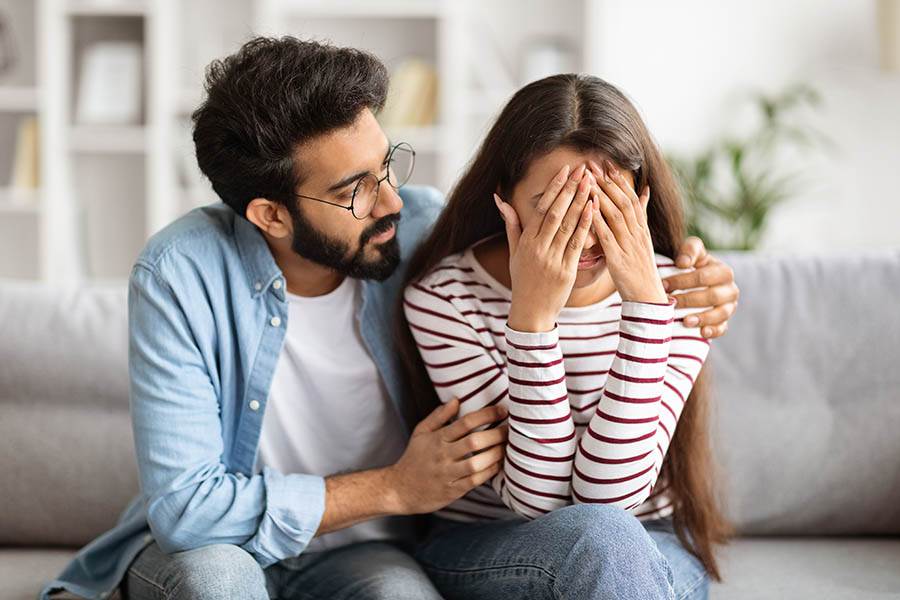
The anxious attachment style, also known as "anxious-ambivalent" or "anxious-preoccupied," is characterized by a deep fear of rejection and abandonment. Individuals with this attachment style often struggle with self-esteem and frequently feel undervalued or unappreciated. They not only desire connection but also fear losing it, which can make them appear "clingy" or "needy." They often require constant validation and regular reassurance that the relationship is secure. In everyday terms, I often see clients who constantly check their phone for texts from their partner, or worry excessively if a response is delayed. This can sometimes involve creating a "fantasy bond," where they cling to an idealized version of the relationship rather than dealing with the reality of connection.
People with an anxious attachment style are often raised by caregivers who were inconsistent in their care and attention. These caregivers might have been sensitive and supportive at times, but nonresponsive or misattuned to the child's needs at other times. For example, a parent might be warm and affectionate on some occasions but cold, distant, and unavailable at other times. Parents who avoid or are slow to console a crying infant or child, refusing to hold or care for them in times of distress, may unintentionally foster an anxious attachment style in the child, which can persist into adulthood.
Those who have anxious attachment styles can struggle with maintaining relationships, as they often unintentionally exhaust or overwhelm partners due to the extreme need for security. While we all need security and stability, people with this attachment style tend to feel a stronger fear and thus have a stronger reaction to perceived threats to the relationship. Sometimes the fear of abandonment and fear of rejection can be so strong that it can overpower or control the relationship. I know that sounds intense, but it's a genuine struggle for them to regulate these fears, which can lead to significant relationship problems.
If you're someone that struggles with an anxious attachment style, the great news is that your patterns, your reactions, and your own emotional regulation can improve over time with consistent work on healing. You can absolutely learn healthier ways of connecting with your partner through individual therapy (with a clinical psychologist or mental health professional), self-healing work, trauma work, and through acceptance, patience, and learning new ways to regulate your emotions and energy. This is where things get interesting.
When in a relationship with someone who has an anxious attachment style, it's crucial to understand that their reactions and fears, though sometimes exhausting or frustrating, are expressions of their need for connection. They don't intend to be overwhelming, but individuals with this attachment style often struggle to feel secure even with a stable partner. Showing empathy, patience, and increasing validation can ease the tension and pressure unintentionally caused by anxious attachments. While you don't need to fulfill every request, creating a safe environment for open communication and fostering emotional well-being can greatly support those with this attachment style. Anticipating their need for validation and encouraging them to explore the underlying roots of their fears can also be extremely beneficial.

Dismissive Avoidant Attachment Style: Valuing Independence Above All?
Dismissive avoidant attachment styles present significant challenges, marked by complexity and difficulty. Individuals with this attachment style tend to avoid closeness and struggle to form or maintain connections within relationships. They often resist emotional intimacy and fear vulnerability, displaying minimal emotional expression. Communication about feelings and needs can be particularly challenging for them, and they tend to avoid or withdraw from conflict, even gentle disagreements or expressions of need from their partner. Dismissive avoidant individuals struggle with supporting others' emotional needs and prioritize independence in relationships. In some cases, they too can unconsciously create a "fantasy bond" by focusing intensely on individual pursuits, thereby avoiding genuine emotional connection.
Consequently, relationships with someone with this attachment style can feel distant or lacking in depth. Despite these challenges, individuals with dismissive avoidant tendencies still crave love and connection like everyone else. However, their development of dismissive tendencies can make it difficult for them to fully trust or open up in relationships. I've guided many through this: it's not that they don't care, it's that vulnerability feels profoundly unsafe to them.
Individuals with this attachment style often exhibit strong self-sufficiency. They hold themselves in high regard, which can lead them to be critical of others at times. They may also appear as though they don't "need" or even want a relationship, yet they often deeply care for and love those they are in relationships with. This complexity makes it a challenging attachment style to navigate.
Dismissive attachment styles typically arise when primary caregivers were not affectionate, lacked emotional connection, or actively avoided closeness with the child. Emotional neglect is a common cause, though abuse in any form can also contribute to this attachment style. A heartbreaking reality for people that were born into emotionally neglectful households is that unless they make conscious effort to improve how they connect with others, they will struggle with how they commit and connect to others until they address those deeper childhood wounds. Healing insecure attachment often starts here, by acknowledging these past experiences.
If you have a dismissive avoidant attachment style, there are several ways to enhance your ability to connect more deeply with your partner and others, free from fear. You're not trapped, and there's no need to remain alone indefinitely. Exploring your past to understand how it shaped your current self can be immensely valuable in uncovering the root causes of your behavior. With this awareness, integrating mindfulness practices and engaging in trauma-focused therapy and self-help efforts can significantly boost your chances of developing more secure attachments in your life.
If you're in a relationship with someone that's dismissive avoidant, it can feel like a complex puzzle you can never win. You may struggle with having your emotional needs met, feel like your partner is intentionally distancing themselves, and see delays or issues with commitment. Trust me, you're not alone in this experience. However, there ARE things you can do to help support your dismissive avoidant partner and improve your relationship. Setting boundaries with regards to how you want to be treated and your needs, providing space for your partner to process, and approaching conflict as calmly and gently (and slowly) as possible can make a huge difference. Don't avoid conflict, change how you approach it instead. Creating a safe space for your partner to open up when they're ready, but not pushing them towards it can help establish increased trust and emotional intimacy.

Disorganized (Fearful Avoidant) Attachment Style: A Conflicted Dance of Fear and Desire
The disorganized, or otherwise known as "fearful avoidant," attachment style is a bit of a combination between the anxious and the avoidant attachment styles, and is also known to be the rarest form of attachment and one of the most difficult to manage. People with disorganized attachment styles can be extremely confusing and contradictory, and deal with complex emotions and emotional dysregulation within relationships.
Individuals with this attachment style have significant difficulty maintaining stability, frequently displaying unpredictable behaviors. They can often sway between being overly attached and needy to being very dismissive and ambivalent. Their behavior can vary depending on the person or situation, often appearing contradictory. This is because they truly desire a deep intimate relationship yet are simultaneously afraid of being in a relationship. Their emotions and their ways of processing appear "disorganized" as they're not consistent.
As I've already explained, people with anxious attachment will tend to do everything they can to stay in a relationship, even ignoring toxic behavior or blatant red flags in order to sustain the relationship. Avoidant people tend to be the opposite, pulling away from emotional intimacy and feeling a deep need for independence and space or avoiding commitment. Someone with a disorganized attachment style, being a combination of the two, will display both of these behaviors. Meaning that they will often deeply fear losing the relationship, want emotional closeness and connection, but then pull away and self-sabotage, thus sabotaging the relationship. Here's what's really eye-opening about this dynamic: it's a constant push and pull, making emotional intimacy incredibly difficult for them.
Disorganized attachment styles typically stem from specific early childhood trauma, particularly when a caregiver becomes a source of fear for the child. This can occur through direct abuse or witnessing abusive behaviors toward others in the household, including physical, sexual, or verbal abuse. Despite these traumatic experiences, the child still forms attachments to the caregiver but struggles with uncertainty and unpredictability in the relationship due to the abuse. As a result, the child learns to perceive relationships as unsafe, unstable, and unhealthy. While they yearn for close connections and love, they lack the necessary skills to feel secure within relationships, carrying the burdens of their childhood into adulthood. This link between childhood trauma and attachment is a crucial aspect of my work.
Individuals with a disorganized attachment style experience relationships as a blend of fear and love. They may alternate between feeling clingy and obsessive one moment and needing significant space and distance the next. Emotionally, this presents a considerable challenge as they navigate intense feelings and struggle with regulating their emotions and self-soothing. Their behavior can be unpredictable, sometimes lashing out at their partner despite craving closeness and connection. Trusting others poses a significant challenge, leading them to appear conflicted and uncertain in relationships, often unsure of how to proceed. Individuals with this attachment style typically have lower self-esteem, engage in negative self-talk, and may harbor excessive suspicion toward romantic partners.
If you have a disorganized attachment style and aim to develop more secure attachments, practicing self-regulation and stress-relief techniques alongside mindfulness can be highly beneficial. Therapy, particularly trauma-informed therapy, may also be essential to address past trauma, while learning to communicate openly and vulnerably can effectively release pent-up emotions. It's important to take space when necessary, without withdrawing completely, as withdrawing may unintentionally create distance in your relationship. Prioritizing your emotional needs while maintaining connection with your partner is key to fostering a healthier dynamic. This is actually a good sign because it shows a desire for growth, which is the first step towards healing insecure attachment.
If you're in a relationship with someone who has this attachment style, you'll likely notice a pattern of pushing you away and then pulling you back in. This can create a roller-coaster effect where stability feels elusive due to intense emotions that manifest through clingy and obsessive or avoidant behavior. Dealing with such intensity can be challenging, as individuals with disorganized attachment struggle with emotional regulation and trust issues, leading to suspicion and over analysis of their partner's actions. This instability can leave you feeling unable to establish a secure and peaceful connection.
However, there are proactive steps you can take to support both yourself and your partner in this situation. Clear, open, and consistent communication can significantly alleviate difficulties. Providing a safe environment for your partner to express themselves without judgment is crucial. Patience and understanding are essential, as any perceived criticism may trigger withdrawal. Couples therapy, including Attachment-Based Therapy or Emotionally Focused Therapy (EFT), is highly recommended for those with disorganized attachment styles, offering a calm, non-judgmental space to learn healthy relationship techniques.

Secure Attachment Style: The Foundation of Healthy Relationships
The secure attachment style is known as the healthiest of all adult attachment styles. Someone who displays this style will often show consistency, have little problem with building trust within the relationship, display a desire for connection and closeness, and will not pull away from emotional intimacy, they generally embrace it. Individuals with secure attachment styles will often communicate their needs and desires well, will often form effective boundaries, and are often willing to seek help or assistance if needed. In my experience, these are the individuals who truly understand the dance of emotional intimacy and attachment.
Secure attachment styles are formed in early childhood, like the other styles, except the caregivers showed consistent love, support and nurturing during key developmental periods. If you have a secure attachment style, your parent or caregiver was likely consistent, displayed love and affection regularly, responded to your needs, and encouraged you to explore your interests. Your parent or caregiver likely expressed their emotions in a healthy way, and did not control, abuse, or neglect you. The great news is that secure attachment can also be learned over time, through self-discipline, mindfulness, and self-awareness. This is what we call "earned secure attachment," a powerful concept showing that your past doesn't define your future.
The Anxious-Avoidant Trap: Understanding a Common Relationship Dynamic
What I've noticed frequently in my client readings is a common, often painful, dynamic: the anxious-avoidant trap. This occurs when an individual with an anxious attachment style is drawn to someone with a dismissive avoidant attachment style, and vice versa. It's a classic push-pull. The anxious partner craves closeness and reassurance, constantly seeking to bridge the emotional distance. The avoidant partner, however, feels smothered by this intensity and pulls further away, needing space and independence. This cycle often reinforces both partners' insecurities. The anxious person fears abandonment more, and the avoidant person fears losing their autonomy. It's a relationship problem that can feel impossible to escape.
Let me explain how this typically plays out. Imagine Sarah, who is anxiously attached, constantly texting her partner, Mark, who is dismissive avoidant, asking if he's okay or if he still loves her. Mark, feeling overwhelmed, might retreat, spend more time alone, or become less responsive. Sarah then interprets this distance as confirmation of her fears of abandonment, escalating her attempts to connect, which in turn makes Mark feel even more pressured to withdraw. In my experience, breaking this cycle requires both individuals to understand their roles and actively work against their natural tendencies. The anxious partner needs to learn to self-soothe and give space, while the avoidant partner needs to practice vulnerability and provide reassurance, even when it feels uncomfortable.
Can You Really Change Your Attachment Style? The Journey to Earned Security
In my line of work, I often get asked, "Can you change your attachment style?" The answer, in short, is a resounding yes. Sometimes attachment styles will change depending on the situation or partner. For example, someone who previously displayed a secure attachment style may develop an anxious attachment style if paired with a dismissive avoidant partner, someone who often struggles with emotional intimacy and closeness and tends to pull away. Conversely, someone with an anxious attachment style can become more secure after being in a healthy relationship for a period of time.
Depending on the situation or the partner, your attachment style can change or be impacted. You may also find that you don't completely "fit" into any one category and instead have elements of more than one attachment style. While attachment styles aren't a "one-size-fits-all" approach, they provide a general view of how people connect and form attachments within relationships, offering insight into the reasons behind their behavior.
While attachment styles typically remain stable once established, meaning that they tend to carry on throughout someone's life, like a pattern, they aren't set in stone. With intentional effort, understanding, patience, and perseverance, individuals can grow from insecure to secure attachment patterns over time. This process is often referred to as "earned secure attachment." Change IS possible with work and consistency, which is truly optimistic. This transformation not only enhances and promotes personal well-being but also fosters healthier, more fulfilling relationships. Overcoming insecure attachment is a journey, not a destination.
Something important to remember is that much of the behavior impacted by your attachment style is not purposeful or conscious. Actions taken in relation to attachment style aren't necessarily conscious or well-thought-out decisions. They're impulses, tendencies, and patterns. Due to the subconscious nature of how they present, it's extremely important to understand how they develop, and how to work consciously and intentionally to grow into healthier, happier, and more sustainable relationship behavior.

Cultivating Secure Attachment: Practical Strategies for Individuals and Couples
What Can You Do to Form More Secure Attachments?
If you or your partner have discovered that you struggle with an insecure form of attachment, the wonderful news is that it doesn't have to remain that way if you don't want it to. There can absolutely be meaningful and positive, lasting change if you're intentional with your efforts. Here's what I tell people: healing insecure attachment is within your reach. Below is a list of things that you can do to help yourself to become more secure in your attachments:
-
Work on communication: Communication is key to ALL relationships, but when dealing with insecure attachment styles, open, honest, and vulnerable communication is necessary. Improve how you approach communication, and even communicate with your partner on how you WANT to communicate. Try to find time to open up to your partner in any way that feels comfortable to you, but try to do it consistently. Over time, communicating won't create the anxiety and tension that it previously did, and you'll find that it releases stress and tension, and helps avoid confrontation and conflict. Consider practicing active listening and "I" statements to express needs without blame.
-
Improve Your Nonverbal Communication Skills: A lot of our communication happens without words. Learning to read and send clearer nonverbal cues, like maintaining eye contact, open body language, and appropriate touch, can significantly enhance connection and reduce misunderstandings, especially for those with anxious or avoidant tendencies.
-
Boost Your Emotional Intelligence (EQ): Developing your EQ involves recognizing, understanding, and managing your own emotions, and influencing others' emotions. This includes empathy, self-awareness, motivation, and social skills. Practical exercises can include journaling about your feelings, identifying triggers, and practicing perspective-taking. Understanding your own and your partner's emotional landscape is crucial for overcoming insecure attachment.
-
Dig into your past: It's often difficult to confront the realities of our upbringing, or to analyze why we have become the way we are now, especially in cases where you've experienced trauma or neglect, yet still understand, care, or love the caregiver/parent who caused the trauma. Exploring your past does not mean you have to relive it, the goal is to understand why you are the way you are, and how to move forward knowing that information. Dig into your past to find information and solutions, not excuses. Inner child work might be a good place to start, and therapy types like Attachment-Based Therapy, EFT, or Trauma-Informed Therapy can be incredibly effective here.
-
Set boundaries and expectations based on your needs: Learn to set healthy boundaries that are effective, stay away from ultimatums. Communicate with your partner about how you want to be treated, and how you want to be talked to. Set expectations for yourself on how you want to treat your partner as well.
-
Make the effort to learn your love languages and your partner's love languages: Learn how you recognize and accept love, and how you feel most loved. Learn how your partner recognizes and accepts love, and prioritize your partner's needs and love languages. Seek mutual consideration within the relationship.
-
Seek compromise and communication as opposed to conflict when triggered or stressed: In any argument or conflict, seek compromise and understanding, and stay on point. Set boundaries around conflict so that arguments and fights stay on point, fair, and healthy. No name calling, no insults, no hurtful words. Seek to address the problem itself and find a mutually agreeable solution.
-
Begin a mindfulness practice: Start incorporating mindfulness into your daily life and activities. Mindfulness is a key practice for overcoming trauma and moving forward from difficult past experiences and can be massively helpful for learning and adapting to new, healthy mindsets. Practicing daily silent meditation (under 10 minutes) can be extremely helpful in promoting mindfulness.
-
Patience and consistency: Be patient with yourself and allow the changes to occur naturally. Be consistent in any changes and be persistent through challenging emotions. A huge benefit to this consistency is that your partner will likely mirror your positive changes and incorporate them as well.

How Can You Help Your Partner Build Secure Attachment?
If you're in a long-term or committed relationship with someone with an insecure attachment style, it can be challenging and difficult to maintain stability. You can feel isolated, alone, or overwhelmed and controlled. Below is a list of things that you can do to help support your partner in improving their insecure attachment style.
Keep in mind, however, that in order for genuine change to be made, your partner will need to desire the change, understand their attachment issues, and resolve to improving them. It does require work on the individual's part, you cannot "force" someone towards a healthier mindset, but you can help positively influence them towards positive change. By the way, this applies to all adult attachment styles.
-
Start with yourself: What is your attachment style? Do you have an insecure attachment style that needs to be addressed as well? What areas can you improve to help create more stability and consistency in your life? Practice self-healing and make sure to address issues that you bring to the table.
-
Create a healthy level of independence within the relationship: This does not mean to pull away or pull back from your relationship. However, you are an individual within the relationship, and it's important not to lose yourself in the connection. Make sure to create space and time for your own interests, ventures, and things that bring you joy. Make sure that your relationship is not the sole source of your joy, fulfillment, and entertainment.
-
Communicate as clearly as possible: Be transparent in how you address issues. Communicate about communicating with each other. Communicate about conflict, and how you want to approach future conflict and address it. How do you want problems or difficulty brought up? How can things be brought up without becoming triggers? Communicate about how you respond to stress, anxiety, and difficult emotions, and what you may need. Have bi-weekly check-ins where you have mutual time to bring up unresolved issues, problems, or anything that needs to be addressed but is being held back. Identify triggers and talk about how to manage them with your partner. Encourage your partner to help you understand their needs. Be okay with being vulnerable when communicating.
-
Give some space: ESPECIALLY if you're dealing with an avoidant or someone with a disorganized attachment style, it's very necessary that you give them space to process. They may need time regularly to exercise their independence, so make sure to allow time for decompression. Communicate with your partner about their need for space, and compromise when it comes to length and frequency.
-
Provide validation: For those with anxious attachment styles, validation is something that's extremely important to help reduce anxiety and tension. Take additional time to focus on them, ask questions, and gain insight into what makes them feel the most secure. Sometimes, even simple verbal affirmations or a touch on the arm can serve as a powerful signal of reassurance, which is vital for emotional intimacy.
-
Learning to address conflict in a healthy manner: This means being extremely accountable, and not allowing conflict to go to unhealthy levels. Deflect any negativity that is directed at you, understand that it comes from a place of trauma and fear, and provide space and understanding. Don't tolerate abuse but learn to healthily de-escalate conflict as it arises. Communicate once conflict is over, to readdress any left-over concerns or hurts (those with avoidant attachment styles often have difficulty with returning to previous arguments due to deeper insecurities and shame, thus they need to learn how to more fully resolve conflict instead of avoiding it).
-
Set appropriate boundaries and expectations with how you want your partner to treat you, and how you want to treat your partner.
-
Maintain a mindfulness practice and help incorporate mindfulness into your daily life: During times of tension or discord within the relationship, a mindfulness approach can help reduce the stress you experience and how you react to any given situation your partner presents. Meaning you'll be more grounded and able to control how you respond.
-
Learn more about your partner's attachment style: How they fit into that mold, and how they don't. Take an active approach in learning about their background and childhood, and how their experiences impacted them over time. Don't become an "armchair psychologist" and attempt to "treat" your partner, but do take an active interest in understanding why they are the way they are. You will likely find unique ways of helping them, identifying with them, and working with them through their troubles and stress.
-
Therapy: Individual therapy and couples/marriage counseling can be extremely effective and helpful in overcoming relationship problems stemming from insecure attachment styles. Having someone that's balanced, non-judgmental, and a neutral party involved can help with seeing things from an objective perspective. Individual therapy can be the most helpful with addressing your own issues, but couples counseling can be equally helpful if your partner is unaware of their attachment style or difficulty with accepting it.

Attachment Styles and Relationship Longevity: What I've Noticed in Client Readings
When considering longevity within a relationship, attachment styles play a considerable role in determining how individuals navigate their connections. Those with an anxious attachment style may find themselves staying in relationships even when they're toxic or unhealthy, driven by a persistent need for validation and love that can unintentionally adversely impact even healthy partnerships. Those with anxious attachment styles often struggle with self-worth and with confidence, they deeply fear abandonment and will often show behavior others may consider "needy," "clingy," or obsessive, when they're genuinely trying to feel safety and security within their relationship. However, the way they go about it can unfortunately drive even healthy partners away, creating significant relationship problems.
On the other hand, individuals with a dismissive avoidant attachment style often struggle with long-term commitment and emotional intimacy, even in mutually compatible and extremely loving relationships. Someone with a dismissive avoidant attachment style may show vulnerability, closeness, and connection early on, but after a period of time (generally 4-6 months though it can vary) will tend to pull back, reduce affection, and avoid emotional intimacy. They often struggle with communication and have a deep-seated fear of conflict, making resolving issues difficult to sometimes impossible. What I've noticed is that these patterns often lead individuals to unconsciously choose partners that reinforce their existing maladaptive patterns. For instance, an anxious person might consistently pick an avoidant partner, inadvertently perpetuating their own fears of abandonment. It’s like a subconscious magnetic pull towards what feels familiar, even if it's not healthy.
Have you ever observed someone who repeatedly cycles through breakups and reconciliations or reacts intensely during conflicts, only to later express deep regret and fear of losing the relationship? Such behaviors often stem from a disorganized or fearful avoidant attachment style, marked by emotional inconsistency and a push-pull dynamic. People with disorganized attachment styles often deeply fear abandonment but can also push people away as a result, sort of like, "I'll abandon you before you can abandon me" if you will. At the same time, they can also show traits similar to those with anxious attachment styles and crave closeness and validation. This can create an extremely confusing dynamic for the other partner.
These examples highlight how insecure attachment styles can pose challenges over time. In contrast, individuals with a secure attachment style tend to cultivate lasting, healthy relationships characterized by trust, security, and emotional closeness. They do not struggle with emotional intimacy with others, connect in a meaningful and vulnerable way, and tend to have a healthy sense of self-confidence, as well as are relatively good at setting boundaries. Relationships with someone with a secure attachment style can feel very stable, supportive, and nurturing, fostering trust and emotional intimacy. This is the part I love to see developing in my clients.
How Digital Communication Shapes Attachment and Relationships
These days, digital technology significantly influences how our attachment styles play out in relationships. What I'm seeing lately is that texting, social media, and online interactions create new challenges and opportunities for expressing attachment behaviors. For instance, anxiously attached individuals might constantly seek reassurance through texts, getting anxious if messages aren't immediately returned. This can be a new form of "clinginess."
Conversely, avoidant individuals might find it easier to maintain distance through digital platforms, perhaps ghosting or avoiding video calls, which allows them to sidestep the vulnerability of face-to-face interaction. Social media can also amplify perceived threats for all insecure attachment styles, with constant comparison or misinterpretation of posts leading to heightened anxiety or withdrawal. Let me explain, a simple "like" on a photo can be perceived as an invasion of privacy by an avoidant, or a sign of infidelity by an anxious partner. The digital realm has added layers of complexity to our fundamental attachment needs.
Exploring Attachment Through a Spiritual Lens
As Psychic Jenna, I often guide clients through relationship dynamics, and I find that while psychology provides a valuable framework for understanding adult attachment styles, exploring these patterns through a spiritual lens can offer complementary insights. This is where things get interesting, because it adds another layer to understanding ourselves and our connections. What I tell people is that our attachment patterns might align with certain astrological traits, or even karmic lessons we're meant to learn in this lifetime. For example, a deeply anxious attachment could be linked to past life experiences of abandonment, or a dismissive avoidant pattern might reflect a soul's need to learn trust through repeated challenges.
Here's what I've noticed: psychic readings can offer a unique perspective on relationship dynamics by tapping into the energetic flow between partners. I've found that sometimes, simply understanding the energetic resonance of a connection can help a client recognize their attachment patterns more clearly. For instance, when I do a love tarot reading, specific cards might highlight themes of control, fear of intimacy, or a deep yearning for connection, which directly correlate to attachment styles. By acknowledging these deeper, spiritual influences, individuals can gain a more holistic understanding of their adult attachment styles and find unique pathways to healing and connection, explicitly differentiating this from the scientific psychological content, yet seeing them as two sides of the same coin.
Questions I Get Asked Most
Can I have more than one attachment style?
Yes, it is possible to have elements of more than one attachment style, especially in different relationship contexts or at different life stages. While one style often predominates, you might find yourself displaying anxious traits in one relationship and more avoidant tendencies in another, or a combination if you have a disorganized attachment style.
How long does it take to change an insecure attachment style?
Changing an insecure attachment style is a gradual process that varies for each individual, often taking months or even years of consistent effort and self-awareness. It involves healing past wounds, learning new coping mechanisms, and practicing healthier relationship behaviors, with therapy often accelerating this journey.
Are attachment styles only relevant to romantic relationships?
No, attachment styles extend beyond romantic relationships and can influence all close relationships, including friendships, family dynamics, and even professional interactions. The way you seek comfort, express needs, and respond to closeness or distance is rooted in your attachment patterns.
What is an example of an "earned secure attachment"?
An "earned secure attachment" refers to someone who initially had an insecure attachment style in childhood but, through intentional personal growth, therapy, or positive relationship experiences, has developed the characteristics of a secure attachment. For example, a person with a history of anxious attachment who learns to trust, communicate effectively, and maintain healthy independence would be considered to have earned security.
References and Further Reading
For those interested in delving deeper into the scientific and psychological foundations of attachment theory, I recommend consulting peer-reviewed psychological research and reputable psychological organizations. Key resources include publications from the American Psychological Association (APA), studies found on NCBI (National Center for Biotechnology Information), and established works by researchers in the field of attachment, such as those cited on platforms like HelpGuide and Columbia Psychiatry. These sources provide comprehensive, evidence-based insights into attachment styles and their impact on relationships.
Final Thoughts: Your Path to Healthier Connections
Bottom line, having a specific attachment style doesn't doom you to a life of unfulfilled or overly challenging relationships. Knowing your adult attachment style can help you gain a deeper understanding of who you are, and how you became the person you are today. It can also help you to identify where some of the tendencies and patterns you display come from, and how to begin addressing and improving them. Every relationship can improve and reach a healthier, happier, and more fulfilling level of connection, including the one you have right now. The great news is you're empowered to make these changes. If you're ready to explore your attachment patterns or need guidance on healing insecure attachment, feel free to reach out. You've got this.